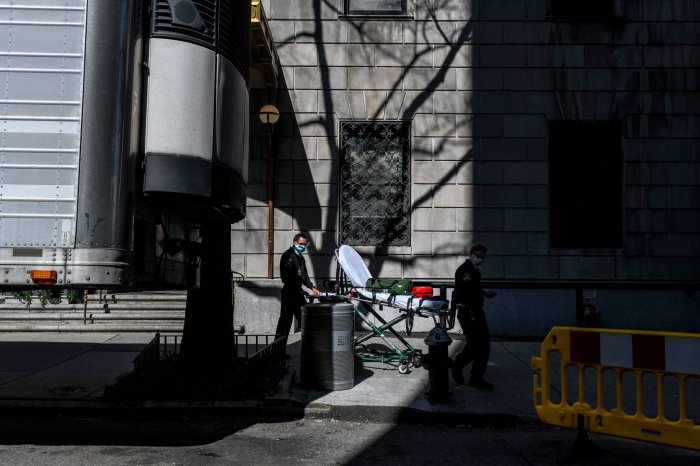
The New York Times reviewed the numbers of deaths in 25 cities and regions around the world during their most devastating months of the outbreak, compared those figures with the cities’ normal mortality levels, and then compared the increases with the carnage wrought by other disasters in history.
Demographers who study patterns of death call these deviations “mortality shocks,” sudden spikes in the number of fatalities not seen in the weeks before and not likely to be seen after the event is over. They’re often attributed to natural disasters, a severe flu season, famines or wars.
Among the findings: Denver had a monthly mortality increase that exceeded New York City’s in the period around Sept. 11, 2001. The rise in deaths in Paris was greater than the increase related to Hurricane Katrina in August 2005. In Madrid, where more than 14,000 people died from mid-March to mid-April (compared with the typical 3,000 at that time of year), the increase was greater than the one in New York City during the flu pandemic in 1918.
These figures reflect only deaths through May. In many cities in Latin America, Asia, Africa and the Middle East, the outbreak is still getting worse.
“Oh my goodness,” Dr. Anthony S. Fauci, the top infectious disease expert in the United States, said on Tuesday. “Where is it going to end? We’re still at the beginning of it.”
New York Times
More about: coronavirus


-1780923278.jpg&h=190&w=280&zc=1&q=100)