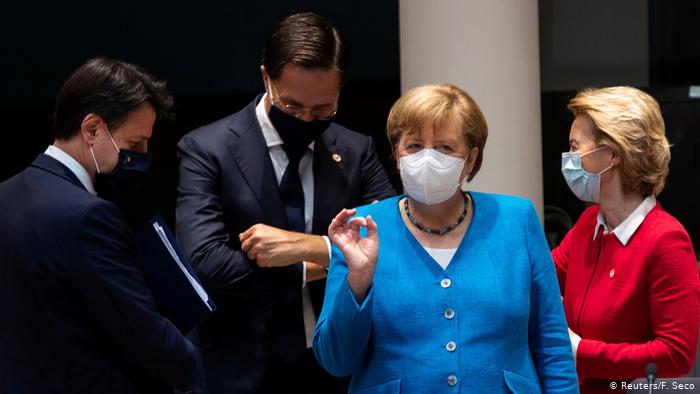
European Union leaders began meeting for a second day on Saturday, after their summit to finalize the bloc's budget and coronavirus recovery fund ran late on Friday evening but ended without a deal.
An unprecedented €1.85 trillion ($2.1 trillion) agreement on the budget and economic stimulus package remained out of reach despite more than 12 hours of discussions.
A lot is at stake during day 2 of the leaders' first face-to-face summit since the coronavirus hit. The bloc faces its worst-ever recession and countries need cash fast to shore up their economies from pandemic-induced crises.
Read more: EU leaders meet for 'very difficult' coronavirus recovery talks
The 27 leaders were due to be presented with "new proposals," EU diplomats and officials said Saturday, to break the deadlock over a €1.074 trillion EU budget, that has been proposed to span over seven years, and a €750 billion virus recovery fund.
The size of the recovery package is the biggest bone of contention as the Netherlands, along with Austria, Denmark, Sweden — the so-called "Frugal Four" — as well as Finland are putting their weight behind a smaller fund and smaller portion of grants.
They have demanded that any loans or grants should be accompanied by strict conditions to ensure the countries that are under heavy debt carry out labor market reform.
Demanding a veto over how the distribution of the proposed recovery fund will take place, Dutch Prime Minister Mark Rutte on Friday emphasized that grants distributed as part of a planned Recovery and Resilience Facility should mandate a unanimous assent from all EU governments.
The revised plan, by European Council President Charles Michel, would see a reduction in share of the free grants issued to EU states, and an "emergency brake" on the disbursement of funds.
The proposal would also increase rebates on the core EU budget for Austria, Denmark and Sweden.
More about:


-1780923278.jpg&h=190&w=280&zc=1&q=100)