The First State Program on the Great Return envisages the implementation of large-scale restoration and reconstruction works in the relevant areas, and establishment of modern infrastructure. At the same time, following the decree signed by the President of Azerbaijan on 30 May 2025, preparations have begun for the Second State Program on the Great Return in the territories liberated from occupation.
The socio-economic program implemented in the territories liberated from occupation as part of the Great Return continues to impress not only Azerbaijan but also the international community.
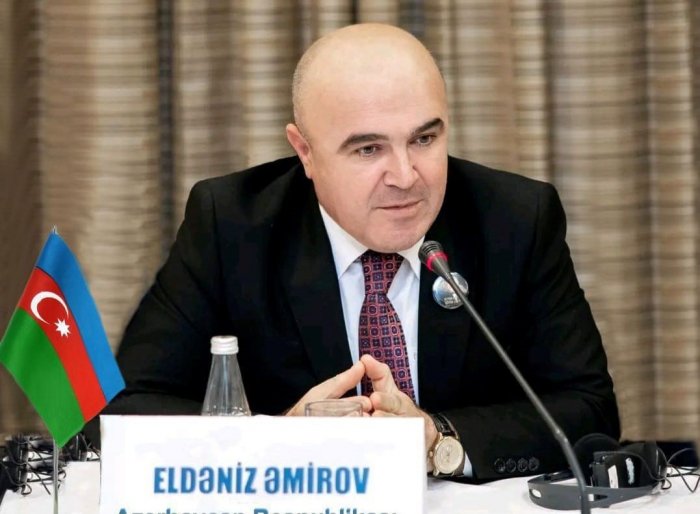
Commenting on the Great Return program, economist and expert Eldeniz Amirov told AzVision.az that just as Azerbaijan managed to inspire this admiration during the 44-day war, demonstrating speed, quality, and professionalism, the country has continued to do so over the past five years, showing great performance in reconstruction and restoration efforts in the territories liberated from occupation according to the planned parameters.
Amirov strongly believes that when comparing the Great Return with the post-conflict reconstruction and development efforts of countries in Eastern Europe and the Middle East, no other state has implemented projects on the same scale as Azerbaijan in terms of speed, tangible outcomes, and quality.
The country has carried out large-scale demining operations, extensive road, gas, energy, and other infrastructure projects, established settlements, initiated resettlement and employment programs, constructed airports, and implemented other major works in a short period of time. In terms of timeline, scope, and systematic approach, these efforts have reached a level that could serve as a model for other countries.
- What is the level of private business participation within the Great Return project, and do you consider it satisfactory?
‘The private sector is certainly playing a role in the reconstruction and restoration efforts in the liberated territories. However, the state clearly holds the dominant position in the role balance. Most projects under implementation are state investment initiatives. The state has allocated 22 billion manat of public funds to these projects to date.
As these lands are cleared off mines and the state develops the necessary infrastructure, this will create conditions to foster private sector development and provide a more favorable environment for businesses to grow. Is the government taking comprehensive measures to support the establishment of private sector activity and a supportive ecosystem in the area? Yes, absolutely.
One of the most significant steps is the extensive incentive package currently in place. This includes exempting entities operating in the area from customs duties, tax and customs payments, and utility costs, while also providing ready-made infrastructure to local business operators through industrial zones. At the same time, we expect – and it is indeed necessary that it does – that the share of private sector activity will grow in the liberated territories in the upcoming period. Following the peace agreement, we will likely witness a markedly different atmosphere in the region.’
- What steps has the state taken to involve private business in the projects, implemented within the Great Return project, and what should it do going forward?
‘The state is implementing several systematic measures, incentive packages, and support mechanisms to increase the role of the private sector in the liberated territories and to stimulate its operations there. This is of critical importance, as the promotion, expansion, and development of entrepreneurship will be key to ensuring sustainable employment once the population returns.
The state itself is interested in the steady expansion of private business in the region. While a number of incentives are already in place, further optimization is needed in certain areas. Moreover, rather than focusing solely on support mechanisms, priority should be given to improving existing procedures that facilitate the launch of business activities.
The introduction of a one-stop-shop system would create a more accessible environment for entrepreneurs wishing to start operations in these areas. Currently, business entities interested in operating here must go through several procedures, apply not to a single institution but to multiple bodies, and often face the need for various approvals, permits, or forms of intervention by different state agencies. The implementation of a one-stop-shop system, along with the coordinated presence of relevant government institutions and the development and comprehensive presentation of alternative solutions, would significantly increase the dynamics of business activity in these territories.’
- Are there any obstacles to involving the private sector in the Great Return Program, and if so, what steps should the government take to eliminate them?
‘I do not think there are any serious problems preventing private businesses from launching operations in the liberated territories. However, there is a need to simplify and optimize the existing procedures. If any problem exists, it may be related mainly to a shortage of qualified personnel. At the same time, the current procedures do take a certain amount of time.
I would particularly emphasize the human capital issue. Reconstructing and restoring our liberated territories, and building smart cities, smart villages, and high-level infrastructure that meets modern global standards, require the most highly qualified professionals. Additional motivational and support mechanisms must be in place there to incentivize top-level specialists to work in these areas.
We must admit that working in those areas is not economically viable for many of our professional specialists. Their families and children live, work, and study in the capital or in other major cities. Leaving their families and established lives behind to work in the liberated territories, or relocating their families there, creates additional expenses. Moreover, business activity in the capital brings entrepreneurs greater profits than operations in the liberated regions.
Thus the income earned by professional personnel, including financiers, engineers, technologists, and other specialists, through their work in the liberated territories is lower than what they make in the capital. This issue is also frequently raised in conversations with individual experts. It is true that the state provides certain incentives to these professionals. However, I believe there is a need to further expand these benefits and to establish a more systematic, progressively strengthening framework of incentives.
Sahil Isgandarov
More about:


-1780923278.jpg&h=190&w=280&zc=1&q=100)