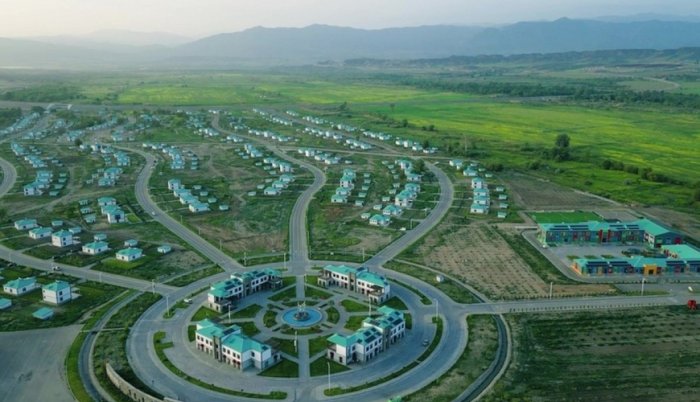
After the 44-day war, the unequivocal key strategic objectives of the state included launching the Great Return Program for the territories liberated from occupation, restoring the area, and relocating people there.
Economy expert Elmir Safarli told AzVision.az in an interview that the Azerbaijani government is focusing on three main phases within the Great Return Program.
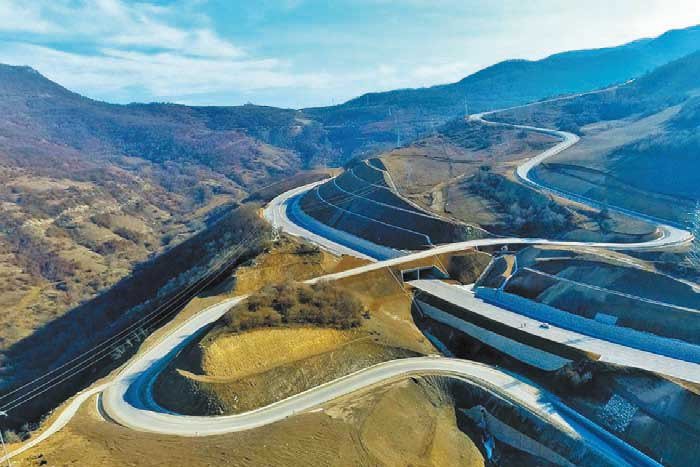
The first phase involves assessing the current state of infrastructure and rebuilding it. No project or work can be implemented without infrastructure. Both the damage caused during the war and pre-existing deficiencies had to be addressed. Restoring damaged electricity and gas lines, as well as roads, was a time-consuming process. All of this had to be carried out systematically, with a long-term perspective, and at a level that would prevent future problems.
As the first phase was completed, the second phase focused on building housing and essential facilities for people to live there, including schools, hospitals, clinics, kindergartens, and social service establishments. Simultaneously, the state worked on establishing production and businesses and developing a sustainable local economy.
We have now reached the third phase, where the main goal is to relocate people to these areas. The state has already begun moving residents into villages and towns across several districts. Taking on such an extensive effort and resolving it at once is a complex process, requiring substantial budgets and financial resources. To move quickly, the government was interested not only in involving state institutions but also in engaging various enterprises, particularly foreign companies. These projects are being implemented through public-private partnerships.
For example, the reconstruction of many villages and the construction of roads were entrusted to several foreign companies. At the same time, local institutions also played a role through oversight, functional responsibilities, and activities financed from the state budget. Naturally, the process would have been far more difficult without parallel implementation.’
- You mentioned that implementing the Great Return Program requires both significant time and substantial financial resources. Keeping this mind, to what extent is Azerbaijan’s private sector involved in these projects, and do you consider this level of participation satisfactory?
‘Two main directions are important here. First, there are projects that the state awards to private companies through tenders. The budget and financing are provided by the state, while construction, engineering, services, and various sectoral projects are offered to private companies through tenders. These companies, in turn, carry out their own assessments. Firms whose project proposals, dedication, and previous references meet the requirements win the tenders and are able to operate in these areas.
The second direction involves companies that voluntarily seek to establish their business in these areas. For example, many retail chains and banks have opened branches there. Based on requests from numerous companies, the government carried out specific documentation procedures, while the Ministry of Economy collected targeted surveys from businesses operating in the region. These surveys revealed which sectors were most important and prioritized. According to these priorities, companies were not only granted permission to operate in these areas but were also provided with special support in their operations.
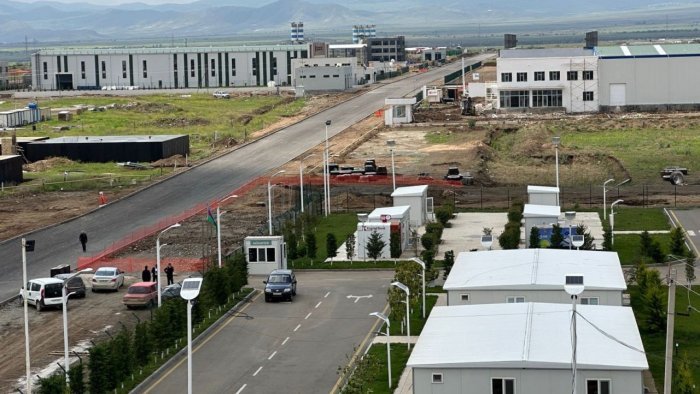
The targeted involvement of private businesses in establishing production facilities is particularly significant. Setting up manufacturing and service sectors is crucial not only for providing employment to people but also for ensuring that, after relocating, they have a stable livelihood, income levels, and purchasing power.
For example, there are medium, small, and even micro-enterprises that establish production facilities in these areas and provide employment for at least 20, 30, or even 50 people. This effectively ensures jobs for citizens returning and living there, which in turn represents a form of support for the state.
Sometimes people think that government offices will be established there and that they will provide everything. However, it is not correct to expect everything from the state. Businesses themselves must also take initiative, in fields such as various production sectors and agriculture. Visiting these territories, one can see that, tailored to the local climate of each district, significant activity has already begun in farming and livestock.
Incidentally, companies in the education sector are also already operating in these territories. Construction and various other companies have established their businesses there. For instance, an entrepreneur I know from Lachin closed his business in Baku, moved his production to Lachin, and provided employment for approximately 40–50 people. Naturally, the state is interested in this as well, since business is the foundation of the economy. The more solidly businesses are established, the stronger the economy will be, and the flow and cycle of life in these areas can progress much more rapidly.
At the same time, various foreign companies are also attempting to invest in Karabakh on their own accounts. For example, Saudi Arabia’s ACWA Power has allocated more than $200 million in Karabakh for energy projects, particularly in green and renewable energy production. In addition, Italian companies have already started implementing certain projects in Karabakh with their own investments. All of this serves as a major foundational impetus for the restoration of Karabakh, for reestablishing life there, and especially for accelerating this process, while also creating both the means and the conditions for people to live in the region.
Territories who have recently suffered from wars generally require state assurance and guarantees to maintain stability during reconstruction. Otherwise, no entrepreneur would invest in territories recently emerging from conflict. However, the insurance, guarantees, and security provided by the Azerbaijani government already make it possible today for businesses to invest in our liberated territories and to implement these processes on a broader scale.’
- Is the situation ideal in terms of the participation of our entrepreneurs in the Great Return Program? Or are there still certain expectations of the state from the private sector, and vice versa? In other words, have we achieved full harmony, or are there further steps to be taken?
‘We cannot say that it is on an ideal level currently. Of course, there are state policies and strategies in place. The state itself is interested in progression in a phased manner and exercises direct oversight over them. While the war has ended in physical terms, significant efforts have been made over the past five years on the Zangezur Corridor and a peace agreement, and an anti-terror operation have been carried out.
However, ensuring full security and stability against the disruptive interests of revanchist forces remains under state control. Some entrepreneurs may wonder why the state does not yet allow them to go and establish businesses there freely. I believe that the state itself, which is interested in this process, will gradually and consistently implement all these steps.
One of the positive aspects is that the state applies tax incentives for companies operating in these areas. Specialized equipment imported for production purposes is exempt from customs duties. A portion of the salaries of private-sector employees working there is covered by the state to ensure employment. Such incentive packages offered by the government provide tangible support to businesses.
However, many business projects still face the problem of providing housing for people on site. For example, relocating a specialist from Baku to Karabakh and ensuring both employment and housing is not yet at the desired level. On the other hand, there is a shortage of specialists available locally, which forces us to turn to foreign labour markets. There may also be certain gaps in the information dimension of state–business cooperation. Entrepreneurs tend to seek a quick return on their investments, whereas the state follows its own policies and proceeds in a phased manner, which can take time. The absence of rapid returns can become a serious obstacle for entrepreneurs and may cause them to withdraw from such business projects.
Many people are establishing businesses in various parts of Karabakh and investing their own funds to keep them operational. I believe that in this regard, the state should take a stronger interest in protecting entrepreneurs. It is true that a sufficient number of incentives are already in place, but they can be expanded. For example, certain facilities could be made available to entrepreneurs without charging rent or requiring financial compensation. More flexible tax rates should be applied, and mechanisms should be developed to ensure that employees remain in these areas. Conditions must also be created for the living arrangements and education of the families and children of employees relocating there. If these issues are not addressed within the framework of state–business cooperation, the matter in question will be very difficult.’
- Are most of the factors you have listed objective, or are there also subjective reasons at play? Perhaps there is also an issue of limited flexibility on the part of the relevant state institutions, or will time put everything in order?
Establishing a regional branch of a state institution, restoring its operations, and ensuring its effective functioning is time-consuming. In that sense, the state cannot really be blamed, because such processes cannot be completed within a few days. At the same time, it would also be unfair to blame entrepreneurs. If we are encouraging business owners to go and invest there, they naturally have their own expectations, and these expectations must also be addressed by state institutions.
All of this should be implemented through joint efforts, with both sides having a genuine interest in the process. Not only as entrepreneurs but also as citizens, we should support the state in strengthening this process. In turn, the state and state institutions should be interested in accelerating these efforts by considering the needs of citizens and business owners. If these two aspects are advanced within a framework of shared interests, then the processes in question will naturally develop in a sustainable manner.
I do not believe that state institutions create obstacles deliberately. However, we must examine the factors that may affect their mobility. Take the Zangezur project, which is important not only for us but for the entire world. In practical terms, we have already completed the work on our side; what remains is the Armenian side. Over the past five years, significant financial resources and substantial effort have been invested in this project.
The demolition and reconstruction of villages, the mine clearance and rehabilitation of surrounding areas, and the construction of infrastructure to serve as an internationally viable transport route are very serious undertakings. However, there are still villages with no ongoing infrastructure projects because they have not yet been cleared of mines. These are significant challenges, and it appears that there will be delays in relocating people to these villages.
I think that, to some extent, we all tend to expect that the state will build houses and provide them, and then we can simply move in. But as citizens, we also need to make an effort and get involved. We should support these initiatives. I believe that if citizens’ ideas, efforts, labor, and even modest financial contributions are incorporated into joint state projects, this process could be completed in a much shorter time.’
Sahil Isgandarov
AzVision.az
More about:


-1780923278.jpg&h=190&w=280&zc=1&q=100)