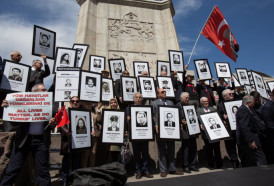
Protests against - and supporting - President Dilma Rousseff and her predecessor "Lula" brought tens of thousands to the streets. DW`s Tobias Käufer reports from an increasingly divided country.
Mello said the committee must consider putting the vice president on trial on suspicion of helping President Dilma Rousseff`s alleged manipulation of the government budget in the run-up to her 2014 re-election.
A separate committee is in the process of reviewing similar charges against the president before an impeachment vote slated for mid-April.
However, Eduardo Cunha, who serves as the lower house`s speaker and is third in line to the presidency, said he would appeal the Supreme Court justice`s request. He called it an unprecedented move by Brazil`s judiciary.
Vice President on Tuesday stepped down as the leader of the Democratic Movement Party (PMDB), previously the largest junior coalition partner in Rousseff`s government, until it pulled out last week.
"Temer is trying distance himself from PMDB to avoid accusations of influencing political decisions aimed at destroying President Rousseff," Augusto de Queiroz, a political scientist at Brazil`s congressional research service, told Reuters news agency.
Justice Mello`s decision marks a significant turn amid a series of corruption-related scandals that have rocked Brazil`s political scene. Rousseff, Cunha and now Temer are being probed for alleged involvement in maladministration and graft.
Renan Calheiros, the head of Brazil`s Senate, suggested on Tuesday that general elections could be a way to clean the slate for the political establishment of South America`s largest country.
"We have to hold onto it as an alternative," Calheiros said.
More about:


-1780923278.jpg&h=190&w=280&zc=1&q=100)