According to him, the deal, which had to be signed in Doha to stabilize the oil price, envisaged to keep the output at the level of January 2016 till October. Such an act could be a serious signal for both OPEC and non-OPEC countries. The deal was reflecting agreement of oil participants to freeze the output to prevent oil price fall again, control over loyalty of countries to their responsibility and establishment of monitoring committee to take measures for other countries to join this process, formation of working group to analyze the changes to be arisen after the document enters into force and etc.: “Though the project consisted of abovementioned, content of the statements issued after meeting among Saudi Arabia, Russia, Qatar and Venezuela on April 16, as well as 6-hours delay of the meeting due to consultations conducted with the governments of Saudi Arabia, Qatar and Iran showed that the hopes for Doha meeting will not justify themselves. Submission of a new deal to the participants proved it”.
“According to the new version of the project, all OPEC member-states had to sign the deal to freeze the oil output. Such position by Saudi Arabia caused participants to be displeased. Russian Energy Minister Alexander Novak protested saying “we’re attending the meeting to sign, but not to discuss””, Aliyev said.
Contradictions were also observed in the discussions on volume of output. So, it was offered to freeze the output at January, March even three-month level. However, no deal was reached and the next meeting was decided to be held in June.
Aliyev thinks that if a deal was reached, this would be the first meeting of OPEC and non-OPEC members for common interests. By demonstrating decisive position in the regulation of oil price, the OPEC would achieve adoption of a decision meeting other oil producing countries, including Azerbaijan and demonstrate its influence in the oil market. But, absence of such step showed that OPEC is not ready for it. Geopolitical factors are also playing an important role here.
“As the low oil price is not profitable for both producers and consumers, the regulation is important. The countries, which are able to do that, will increase the oil output. These countries are Saudi Arabia, Iran and Libya. So, Saudi Arabia states to increase the daily oil output to 12.5 mln barrels, Iran to 4mln barrels. As you see, divergencies among countries, which are able to influence the oil price, make impossible any agreement to provide the reduction in oil output. Other oil producing countries are not expected to increase the output”, Aliyev said.
Contradictions within OPEC prevented success in Doha meeting
20 April 2016
Read: 1014
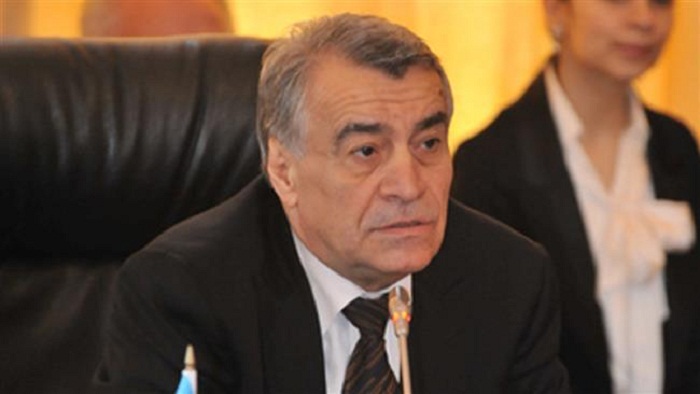
Contradictions within OPEC prevented success in Doha meeting, said Azerbaijani Energy Minister Natig Aliyev while assessing results of Doha meeting.


-1780923278.jpg&h=190&w=280&zc=1&q=100)