"We realize what period in the Nagorno-Karabakh settlement we are living through," he said. "We have made efforts - President Vladimir Putin personally - to make sure that the outbreak of violence ends."
"Now it is fundamentally important to strictly comply with the ceasefire agreements and prevent new violations of the 1994 and 1995 agreements, which enshrine and strengthen the indefinite ceasefire regime," the Russian minister said.
According to Lavrov, it is necessary to carry through the agreements with the OSCE on confidence-building measures, de-escalation of tensions and snipers.
"As for the political settlement, we are ready to do everything possible," he said. "We need to do our utmost to prevent violence and incidents."
The Nagorno-Karabakh conflict entered its modern phase when the Armenian SRR made territorial claims against the Azerbaijani SSR in 1988.
A fierce war broke out between Azerbaijan and Armenia over the Nagorno-Karabakh region of Azerbaijan. As a result of the war, Armenian armed forces occupied some 20 percent of Azerbaijani territory which includes Nagorno-Karabakh and seven adjacent districts (Lachin, Kalbajar, Aghdam, Fuzuli, Jabrayil, Gubadli and Zangilan), and over a million Azerbaijanis became refugees and internally displaced people.
The military operations finally came to an end when Azerbaijan and Armenia signed a ceasefire agreement in Bishkek in 1994.
Dealing with the settlement of the Nagorno-Karabakh conflict is the OSCE Minsk Group, which was created after the meeting of the OSCE Ministerial Council in Helsinki on 24 March 1992. The Group’s members include Azerbaijan, Armenia, Russia, the United States, France, Italy, Germany, Turkey, Belarus, Finland and Sweden.
Besides, the OSCE Minsk Group has a co-chairmanship institution, comprised of Russian, US and French co-chairs, which began operating in 1996.
Resolutions 822, 853, 874 and 884 of the UN Security Council, which were passed in short intervals in 1993, and other resolutions adopted by the UN General Assembly, PACE, OSCE, OIC, and other organizations require Armenia to unconditionally withdraw its troops from Nagorno-Karabakh.
Russia favors strict compliance with ceasefire in Nagorno-Karabakh - FM
22 April 2016
Read: 1201
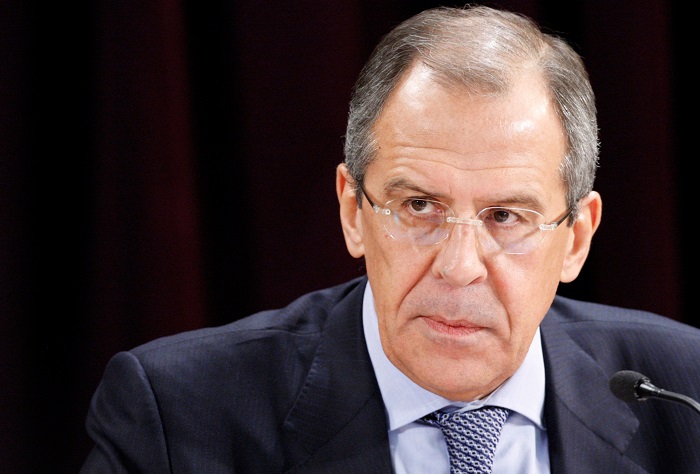
Moscow advocates strict observance of the agreements on the ceasefire in Nagorno-Karabakh, Russian Foreign Minister Sergey Lavrov said on Friday opening the talks in the expanded format with his Armenian counterpart Edward Nalbandian, TASS reported.


-1780923278.jpg&h=190&w=280&zc=1&q=100)