Bartlomiej Plebanczyk - from northern Poland`s Marmerki Museum - says he stumbled across a previously unknown underground room during a radar probe of a complex of Nazi tunnels and bunkers.
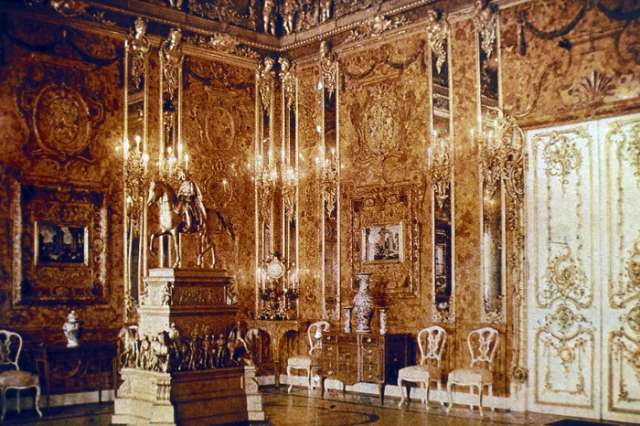
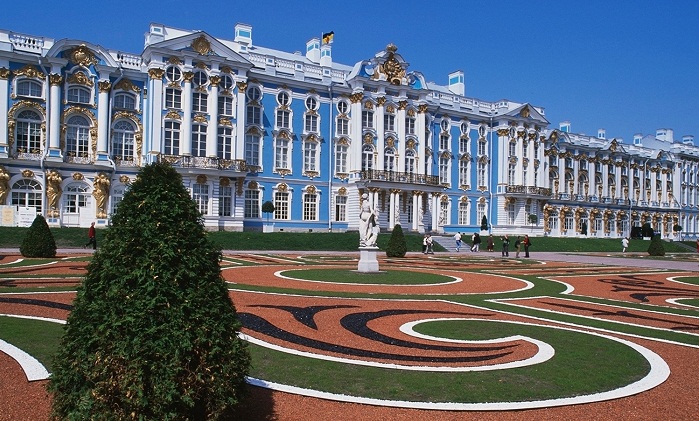
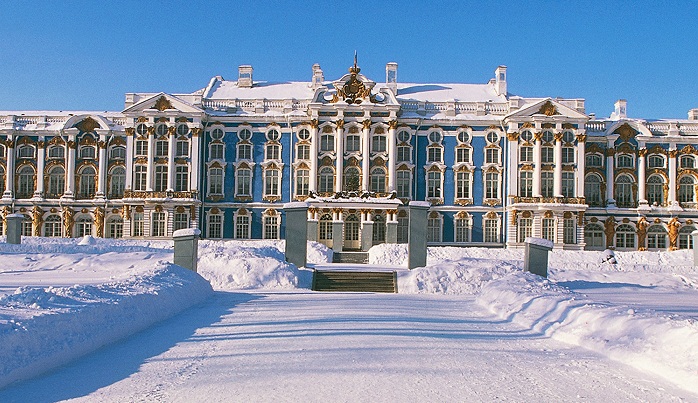
He believes it could hold a haul of looted Nazi gold and the astonishing Amber Room, stolen more than 70 years ago from Catherine Palace, near St Petersburg, Russia.
The room - measuring 6.6 ft by 9.8 ft - has not previously been recorded in any study of the bunkers in Poland’s Mazrian Lake District.
Now Plebanczyk is seeking permission to drill down into the room so he can lower a video camera to inspect the contents.
The area was suspected to contain a secret building in the 1950s after the Nazi commander of East Prussia, Erich Koch, hinted at its existence when jailed after the war.
But Plebanczyk told local media: "Then the sappers came to blow up random locations in the foundations of bunkers, but they found nothing.
"But I used ground penetrating radar, so I could discover the treasure."
Speaking of his alleged discovery, Plebanczyk said: "We need to drill into the room in the bunker and lower a camcorder there.
"However, we have to wait for the consent of the conservator conservation officials"
The Amber Room was an ornate palace interior crafted out of amber, gems, and gold for the Tsars and has been missing since it was stripped from the Russian palace in 1941.
Experts say that today it would be worth more than £350 million.
The Amber Room’s location and a hoard of Nazi gold missing since 1945 have been two of the great mysteries of World War II.
The Mazrian Lake District contains one of the best-preserved complex of undamaged Nazi bunkers and barracks.
Between 1940 and 1944 the 250 buildings housed 40 of Germany`s highest ranking generals and field marshals, plus 1,500 other officers and men.
They survived largely undamaged because fleeing Germans had no time to destroy them as they tried to escape invading Russian troops.
At the height of its power, the complex was thought to be an impenetrable fortress where looted treasures were safe. It bristled with barbed wire, tank traps, anti-aircraft cannons and had its own Panzer tank division on call.
More about:


-1780923278.jpg&h=190&w=280&zc=1&q=100)