He made the remarks during the hearings in the Azerbaijani parliament on the "Recent developments on the line of contact: Problems of the international humanitarian law.”
Khalafov said that there is no such thing as the “Armed Forces of the Nagorno-Karabakh Republic,” noting that it’s Armenia and its supporters that are trying to create this notion.
He stressed that Azerbaijan has all capabilities and rights to liberate its lands.
According to the deputy FM, the international community says there is no alternative to a peaceful resolution of this conflict.
Azerbaijan advocates a peaceful solution to the conflict, Khalafov said.
“If Armenia is not forced into peace, it will be impossible to settle the conflict peacefully,” he underlined.
“Thanks to the intensive efforts of Azerbaijan, the international community realizes it. The people of Azerbaijan do not want to live in “No war, no peace” condition. We are convinced that our economic achievements and army buildup will allow us to solve this conflict. Azerbaijan will restore its territorial integrity,” the deputy FM added.
Khalafov also touched NGOs.
“A paradox-like situation has arisen. Our NGOs present to international organizations only negative cases. NGOs should demonstrate a progressive position in this process. We, as the Ministry of Foreign Affairs, are trying to build dialogue with international organizations and NGOs. The more Azerbaijan integrates into the international community, the more power will our state gain,” said Khalafov.
He added that in the Criminal Code there needs to be a provision on initiating a criminal case for the fact of aggression.
“I believe the victory of Azerbaijan will come some time soon,” he stressed.
The Nagorno-Karabakh conflict entered its modern phase when the Armenian SRR made territorial claims against the Azerbaijani SSR in 1988.
A fierce war broke out between Azerbaijan and Armenia over the Nagorno-Karabakh region of Azerbaijan. As a result of the war, Armenian armed forces occupied some 20 percent of Azerbaijani territory which includes Nagorno-Karabakh and seven adjacent districts (Lachin, Kalbajar, Aghdam, Fuzuli, Jabrayil, Gubadli and Zangilan), and over a million Azerbaijanis became refugees and internally displaced people.
The military operations finally came to an end when Azerbaijan and Armenia signed a ceasefire agreement in Bishkek in 1994.
Dealing with the settlement of the Nagorno-Karabakh conflict is the OSCE Minsk Group, which was created after the meeting of the OSCE Ministerial Council in Helsinki on 24 March 1992. The Group’s members include Azerbaijan, Armenia, Russia, the United States, France, Italy, Germany, Turkey, Belarus, Finland and Sweden.
Besides, the OSCE Minsk Group has a co-chairmanship institution, comprised of Russian, US and French co-chairs, which began operating in 1996.
`If Armenia not forced into peace, no negotiated solution to Karabakh conflict`
13 May 2016
Read: 2428
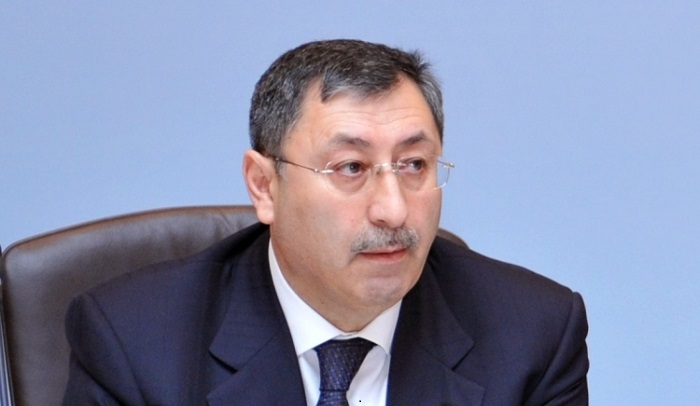
Azerbaijan relies on the norms of international law in its political and diplomatic activities, Deputy Foreign Minister Khalaf Khalafov said on Friday.


-1780923278.jpg&h=190&w=280&zc=1&q=100)