At least 42 Polish Holocaust survivors were bludgeoned to death and dozens more were injured in the Kielce pogrom. According to the Washington-based United States Holocaust Memorial Museum, it constituted the worst anti-Semitic attack in postwar Poland.
Before World War II, Jews made up a quarter of the city`s 80,000 residents. Historians estimate that about 500 of them survived the Holocaust. But one year after the war, they were again made targets amid an escalating anti-Semitic frenzy in parts of Poland.
On July 4, a mob of communist police, soldiers and workers from a nearby steelworks raided a house on Planty Street that had been sheltering Holocaust survivors, including some who had spent time at the infamous Auschwitz-Birkenau Nazi death camp.
The killings prompted many Jewish Poles to leave the country.
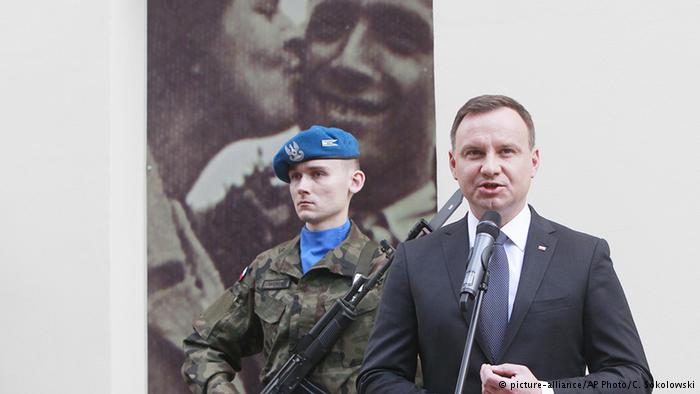
In the past, leading members of Poland`s ruling Law and Justice Party, including Duda, have made contradictory statements on matters of prejudice and xenophobia. The conservative party took a strong anti-migrant stance during the election campaign that saw them clinch power late last year. During that time, party leader Jaroslaw Kaczynski accused refugees of carrying "parasites and protozoa" to Europe. In recent months, however, both Duda and Kaczynski have strongly condemned xenophobia and anti-Semitism at a number of events.
More about:


-1780923278.jpg&h=190&w=280&zc=1&q=100)