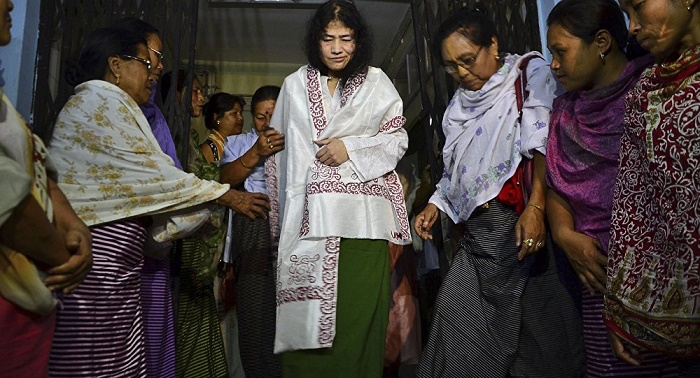
Sharmila says her decision to end the hunger protest is motivated by her desire to contest elections. "I have decided to end my 16-year fast on August 9 and contest the 2017 state elections as an independent candidate."
Sharmila says she would continue to protest the AFSPA, though in a more democratic manner. "My fight so far has been all alone and so I have decided to wage a war against the act democratically by becoming a lawmaker instead of continuing with my fast."
Sharmila is currently in judicial custody as she faces charges of attempting suicide. She started her protest in the year 2000, a day after Indian armed forces allegedly killed 10 civilians including two children in the garb of the AFSPA which gives special powers to soldiers to shoot and arrest people in regions declared as "disturbed" by the government.
Last week in Parliament, Kiren Rijuju, India`s Minister of State for Home Affairs said, "At present there is no proposal under consideration to withdraw AFSPA from the North Eastern Region."
On July 8 this year, India`s apex court criticized the AFSPA and ruled that armed forces personnel could be tried by normal criminal courts in case of a complaint of excessive force used under the law. The Supreme Court ruled this judgement on a petition filed by the Extra Judicial Execution Victim Families Association who alleged that a total of 1528 civilians had been killed by armed forces in northeastern India.
More about:


-1780923278.jpg&h=190&w=280&zc=1&q=100)