It was a typical August, summer weekend in Chicago: dozens of people were shot, several were killed.
But outside of the city`s ultra-violent South and West Sides, almost no one noticed.
On the west side, five men shot dead a 38-year-old man parking his car, leaving a puddle of blood behind. A few blocks away, more crime tape signalled another murder - a familiar scene to locals here.
Aisha Jones, who lives in the area, told Al Jazeera that the city`s violence is so rampant that her daughter and two sons are scared to leave the house.
"There was a shooting. We were standing on my friend`s porch about two weeks ago, and a guy came up just started shooting ... all the kids just scattered."
In a recent episode, shortly after midnight on Friday, police received reports of shots being fired on Monroe Street, on Chicago`s West Side.
They arrived to find a 30-year-old man with a bullet wound to the head and pronounced him dead. An 18-year-old woman was also shot in the leg. A 25-year-old man later arrived at the hospital with wounds he said were from the same incident.
`Institutionalised racism`
In many aspects, Chicago`s story is a tale of two cities.
"It is the most segregated city, black-white, in the United States. People with middle-class values and wherewithal have moved out, so what you have left are the poorest of the poor, the most hopeless of the hopeless, the most destitute of the destitute," Arthur Lurigio, professor of criminal justice and psychology at Loyola University, told Al Jazeera.
Lurigio said that violence in Chicago is much worse than in other cities "because of institutionalised racism ... African Americans have been walled off from the rest of Chicago for 50 or more years".
Although only one in three Chicago residents is black, the black community accounts for three out of four shooting victims.
Violence peaked in the 1990s as gangs fought over turf to sell crack cocaine, then a new drug, leading police to arrest gang leaders en masse.
Derek Brown, an ex-gang member turned youth boxing trainer, said: "The discipline code of the streets has left ... when there are no leader, there is no structure. So now crime is coming from children. You have 16-year-old children who are killers now."
Chicago has received renewed attention after the cousin of a famous sportsman was killed. On Friday, Nykea Aldridge, the cousin of Chicago Bulls basketball star Dwyane Wade, was killed while pushing a pram, police said.
Two brothers out of jail on parole, apparently aiming for the man walking next to her, were responsible, police said.
Though the details of that killing were discovered, nine out of 10 shootings are never solved.
"This tragedy isn`t just noteworthy because Ms Aldridge has a famous family member," said Eddie Johnson, Chicago police superintendent.
"It`s noteworthy because these two offenders are the prime example of the challenge we face here in Chicago, repeat gun offenders that don`t care who they shoot, don`t care whose life they take and clearly don`t fear the consequences of their action."
Chicago has recovered an illegal handgun for every hour of the year of 2016, he added.
The Stroger-Cook County hospital treats an average of 20 victims of such violence each weekday, around 40 on each day of the weekend, with the toll rising during summer and warm months.
Gun violence in Chicago peaks in summer months - US
01 September 2016
Read: 1142
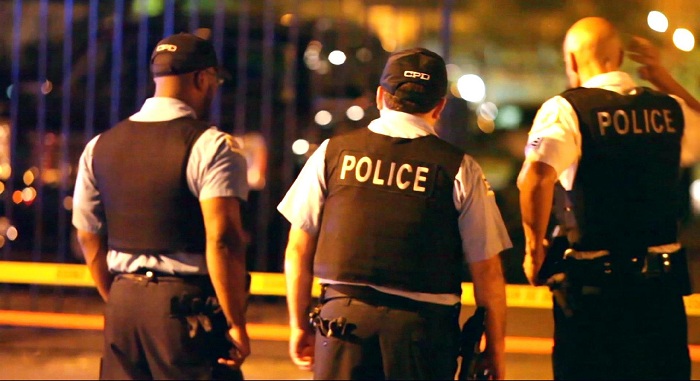
Shootings in US city have peaked in August, with gunshot victims flooding hospital wards each weekend.


-1780923278.jpg&h=190&w=280&zc=1&q=100)