"There may be a problem because if these crimes aren`t illegal in the other countries, it will make extradition difficult," Foreign Minister Don Pramudwinai told reporters. "However, we can still ask for cooperation."
Thailand`s lese-majeste law - which criminalizes criticism of the monarchy - is among the toughest in the world; speaking ill of the royal family can lead to up to 15 years imprisonment.
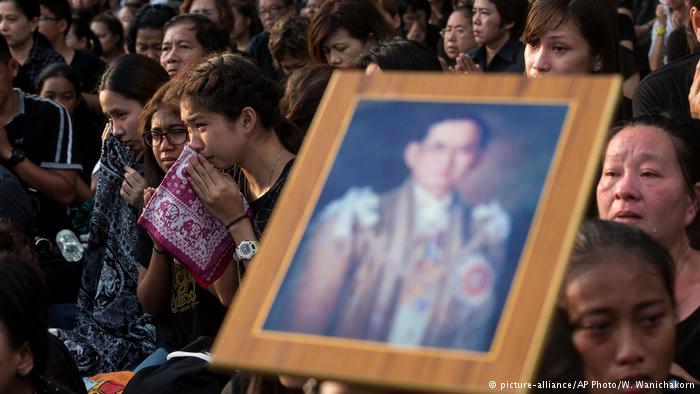
Following this month`s death of the southeast Asian country`s king, surveillance of online content has increased. The Thai government last week requested that certain videos be removed from the online platform YouTube. That`s in parallel to a jump in the number of prosecutions for criticism of the monarch, the regent or the heir to the throne. Since taking power in 2014, Thailand`s military junta, known officially as the National Council for Peace and Order, has taken a tough stance on dissenters.
Thailand ignores international criticism
Criticism from the international community over prison sentences for civilians found guilty of violating the lese-majeste law has so far not dissuaded the junta`s tough line as it seeks to bolster ultranationalist sympathies.
"First, the extradition requests are part of scare tactics to curb the so-called violations, and second, to appease the powerful elite factions whose interests rely on ultra-royalism," Verapat Pariyawong, a visiting scholar at London`s SOAS School of Law, told Reuters.
To date, no country has openly indicated readiness to extradite any suspect to Thailand.
More about:


-1780923278.jpg&h=190&w=280&zc=1&q=100)