Chinese Foreign Ministry spokesman Lu Kang told a press briefing that China was very much concerned about the visit, scheduled for March 2017, given the seriousness of China-India border dispute.
"India`s invitation to the Dalai Lama for activity in the disputed areas between China and India will only damage peace, stability of the border areas as well as the bilateral relationship between China and India," he said.
Kang called on India to adhere to "the bilateral consensus on boundary question," and refrain from supporting the exiled spiritual leader, claiming that otherwise the countries will not be able to maintain a healthy and steady bilateral growth.
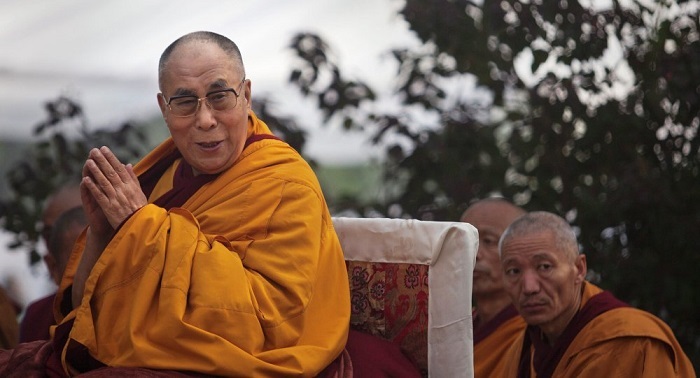
The government of India has approved the visit, with a spokesman for India`s foreign ministry saying at a news briefing on Thursday that the Dalai Lama is a "revered spiritual figure and an honored guest of India" who is "absolutely free to travel to any part of the country."
The Indian spokesman pointed out that the 80-year-old Nobel Peace Prize winner has visited the state in the past, and that there is no reason to prohibit him from visiting again, and meeting his followers.
A member of the Dalai Lama`s private office, Tenzin Taklha, told Reuters that the holy leader looked forward to the trip.
The Dalai Lama is denounced in mainland China as a separatist seeking to establish Tibetan independence. The Tibetan leader received a Nobel Prize in 1989 for his nonviolent campaign to end the Chinese seizure and occupation of Tibet. Disagreements between India and China over portions of their 3,500 km (2,175-mile) border resulted in a brief war in 1962. The neighbors have moved to control the dispute, but repeated rounds of talks have made little progress.
More about:


-1780923278.jpg&h=190&w=280&zc=1&q=100)