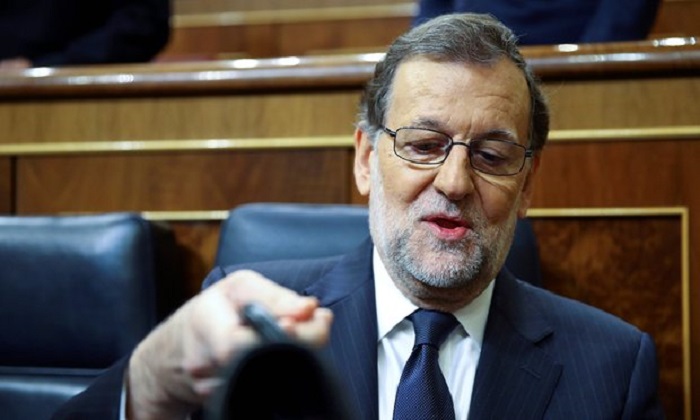
Although the PP took the most seats in the elections in December 2015 and June this year, it failed to win an outright majority in either. The PSOE, which came second in both, had vociferously refused to do anything to ease Rajoy’s return as prime minister, until its leader Pedro Sánchez was ousted in an acrimonious uprising that has torn the party apart.
Sánchez had dismissed pleas from parts of the PSOE to allow the PP back into government, insisting that the latter was too deeply mired in a series of corruption scandals to be allowed to retake office.
He stood down as leader this month after losing a vote that would have allowed grassroots party members to back or sack him in a leadership contest.
The PSOE’s caretaker leadership has abandoned Sánchez’s position and decided to abstain in Saturday’s investiture vote, thereby allowing Rajoy to form a minority government.
It voted against him in protest at his policies after the first investiture debate earlier this week, leading Rajoy to lose by 10 votes in Spain’s 350-seat congress of deputies.
His tone during the debate on Wednesday was conciliatory. “I know there will be obstacles and that every step or law will have to be the fruit of an accord,” he said. “We’ve lost 10 months, but they won’t have been in vain if we’ve learned something.”
Rajoy’s first task when he resumes office will be to get next year’s budget approved. Spain’s economy grew by 0.7% over the previous quarter, but the country needs to find €5bn (£4.5bn) through tax increases or cuts if it is to meet its deficit target.
The PSOE has made it clear that the party will not approve the next government’s budgets or do anything to bolster its stability.
The disarray in the ranks of the PSOE has provided the anti-austerity party Podemos with an opportunity to displace it as the dominant force of the Spanish left.
The Podemos leader, Pablo Iglesias, told parliament on Thursday that his party would not “fall into line” and asked how the Socialists could provide a real opposition if they had allowed Rajoy to govern.
In a blistering address, he told the PSOE: “It may be hard for you to recognise this, but you’re closer to the People’s party than to us.”
More about:


-1780923278.jpg&h=190&w=280&zc=1&q=100)