“This is as unified as I’ve seen us,” Rep. Peter King (R., N.Y.) said of the House GOP, which has long struggled to align its most conservative and centrist lawmakers.
In one sign of the newly strengthened alliance between Mr. Ryan and the incoming GOP administration, Rep. Chris Collins (R., N.Y.), the congressional liaison to Mr. Trump’s transition team, gave a speech supporting Mr. Ryan’s bid as speaker. “This is a team effort. The administration has their agenda, but they need legislation to get it done,” Mr. Collins said.
Freshmen joined returning congresspeople for their first day of work on Capitol Hill since the 2016 election. Republicans and Democrats had differing messages on transitioning to an administration headed by President-elect Donald Trump.
But Republicans already face thorny questions about how closely they will hew to their conservative ideology in working with Mr. Trump, who has demonstrated less concern with reducing the budget deficit and more interest in cutting deals. Mr. Ryan played down any divisions with Mr. Trump.
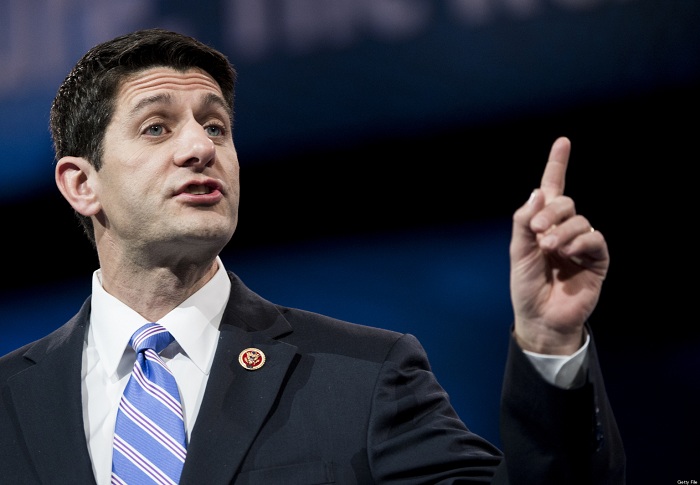
“Welcome to the dawn of a new, unified Republican government,” Mr. Ryan told reporters Tuesday.
Mr. Ryan will still have to win a vote by the full House in early January, when he will need to secure the support of a majority of lawmakers voting for an individual. He is unlikely to receive any votes from Democrats in what is typically a partisan vote.
He might still lose some votes from the most conservative Republicans, who said this week they would be watching how he handles Congress’s final weeks in session this year before deciding how they cast their ballots in the January vote.
Still, Mr. Ryan can afford to lose some GOP votes and win a majority on the floor. House Republicans will have at least 238 seats in the next session of Congress, with four House races still too close to call by the Associated Press. That means Mr. Ryan could lose 20 GOP votes and still be re-elected speaker in a vote expected to take place Jan. 3.
Even before Mr. Trump takes office, Republicans remain divided over how they should fund the government next year and whether to revive a long-vilified practice known as “earmarks” in which lawmakers request funding for specific projects. The House banned earmarks six years ago, but some lawmakers are pushing to restore them, a practice that supporters say would give them more control over how federal dollars are spent and give leaders leverage in wrangling with their rank-and-file.
“We’re not shrinking the amount of money we’re actually spending, we just gave that power up to the executive branch,” said Rep. Tom Rooney (R., Fla.), who said his proposal would be largely limited to U.S. Army Corps of Engineers projects.
But the idea of reviving earmarks outraged some lawmakers and outside conservative groups. The conservative Club for Growth launched robocalls Tuesday in two districts held by supporters of bringing back earmarks.
“We just had a ‘drain the swamp’ election,” said Rep. Dave Brat (R., Va.), referring to Mr. Trump’s call to shake up Washington’s political establishment. “If you go back to the people and say, ‘We’re going to reopen earmarks,’ you should pack up and go home.”
The House GOP is expected to vote Wednesday on whether its internal rules should allow the individual lawmaker requests. Senate Majority Leader Mitch McConnell (R., Ky.) told reporters last week that he didn’t think the Senate would revive the practice.
House Republicans on Tuesday also re-elected Majority Leader Kevin McCarthy of California, Whip Steve Scalise of Louisiana, Conference Chair Rep. Cathy McMorris Rodgers of Washington and Rep. Luke Messer of Indiana as their policy committee chairman.
In new additions to GOP leadership, Rep. Steve Stivers of Ohio was chosen to be the chairman of House Republicans’ campaign arm and Reps. Doug Collins of Georgia and Jason Smith of Missouri were elected to lower-level posts.
/The Wall Street Journal/
More about:


-1780923278.jpg&h=190&w=280&zc=1&q=100)