The problem starts at the top. When Mr Zuckerberg was younger, it seemed unfair to criticise his skills as a presenter. Public presentation was clearly not his thing. But so what? He was busy coding and building his company. Twelve years and $50bn later, there are no more excuses.
A couple of days after the election, he spoke at the Techonomy conference in Silicon Valley and his communication strategy consisted of three steps. First, minimise the problem. He said fake news was a tiny amount of what appeared on Facebook’s news feed, and to think it influenced the election “in any way is a pretty crazy idea”.
Second, suggest your critics are misanthropes or elitists by saying repeatedly that you “really believe in people”. To blame fake news for Mr Trump’s election, Mr Zuckerberg said, implied a lack of empathy for people’s real concerns.
The third step is to talk about all the other fabulous things you are doing rather than focus on the charge that you tipped a US election by enabling the dissemination of bogus stories. Mr Zuckerberg can talk your ear off about how he and his wife are investing in teams of engineers for schools to help children learn. Or how Facebook is beaming internet services to countries and communities without it. It is splendid stuff but irrelevant to the question at hand.
In interviews, Mr Zuckerberg can appear highly cautious, his answers political. His parsing of the fake news problem contrasted with the explanation offered by Paul Horner, a purveyor of fake news. “Honestly, people are definitely dumber,” Mr Horner told The Washington Post. “They just keep passing stuff around. Nobody fact-checks anything any more — I mean, that’s how Trump got elected. He just said whatever he wanted, and people believed everything, and when the things he said turned out not to be true, people didn’t care because they’d already accepted it. It’s real scary.”
Who are we to believe? Mr Horner, who falsely claimed to be British graffiti artist Banksy, and created the widely shared fake story that President Barack Obama had signed an executive order for another election on December 19? Or Mr Zuckerberg, the high-minded Oz of Facebook?
It is well worth reading the BuzzFeed research from October that scrutinised the fake news phenomenon during the election. It looked at hyper-partisan Facebook pages on both right and left. On three rightwing sites, 38 per cent of all posts “were either a mixture of true and false or mostly false”, compared with 19 per cent on the leftwing sites.
On the right, there were claims that Hillary Clinton used a body double and Mr Obama had called for a “New World Government” at the UN. On the left, it was said the Russians had rigged online opinion polls in favour of Mr Trump. In the echo chamber of Facebook, these claims were widely shared and liked.
By the standards of true “yellow” journalism — crude, sensationalist, scaremongering — Facebook’s alleged negligence seems pretty tame. When an illustrator reported back from Cuba in 1898 that there was no war to cover, William Randolph Hearst — the publisher who was at the time keen to gin-up a Spanish-American conflict — was said to have fired him a telegram: “You provide the pictures and I’ll furnish the war.” Some say this story is itself an example of fake news. A lot of US cable news could similarly be accused of pandering to bias rather than fact.
Facebook, Google and Twitter are under attack from outside and within over fake news
But Mr Zuckerberg’s defence that Facebook should be “extremely cautious about becoming arbiters of truth” doesn’t hold. He can talk all he likes about how the Facebook feed is primarily about bringing us news from family and friends that is most meaningful. But his is a business about scale, about 1.8bn regular users and how you target and monetise them. His evasions sound like the excuses of someone fearful of unpicking his own business model.
Facebook has always been a divisive medium. People love it for the connections it builds, and hate it for all the preening posts and humblebrags. Mr Zuckerberg talks about the wonders of sharing and transparency in moral terms. He is more coy about the financial plunder in personal data.
For all the people who use Facebook every day, it’s not as irreplaceable as Google or Amazon. Even Mr Zuckerberg seems to have moved on. He no longer adds to Facebook’s base code. He has newer toys to play with, such as Instagram, WhatsApp and the virtual reality device maker Oculus, not to mention his philanthropic efforts through the Chan Zuckerberg Initiative.
There is much more to life, he said in his post-election interview, than politics. He is right, of course. But it sounded like, having stuffed the world with this problem, he was happy walking away.
Mark Zuckerberg’s flawed approach to fixing his fake news problem
19 November 2016
Read: 1059
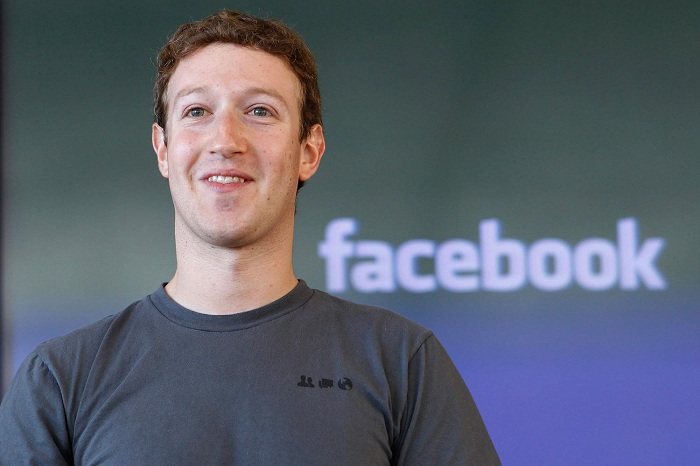
Since the US election, Facebook and its chief executive Mark Zuckerberg have been dodging the charge that they let “fake news” fester on their news feed, tilting the vote in favour of Donald Trump. It’s an ugly accusation and one that the social media site has done a terrible job of batting away. For a company awash in data on human interaction, it is remarkably bad at it.


-1780923278.jpg&h=190&w=280&zc=1&q=100)