Ahmadov made the remarks commenting on the cancelled meeting of Azerbaijani and Armenian foreign ministers, which was to be held with participation of the OSCE Minsk Group co-chairing countries’ foreign ministers.
The meeting was cancelled due to Armenia’s destructive stance.
Ahmadov noted that Armenia continues to demonstrate a destructive position; it prevents the conflict’s settlement and tries to keep the status quo.
“I think the Armenian leadership is well aware that sooner or later the conflict will be resolved on the basis of the norms of international law, and the occupied Azerbaijani lands will be liberated,” he said.
Otherwise, Azerbaijan will solve this problem using its capabilities, added Ahmadov.
The conflict between the two South Caucasus countries began in 1988 when Armenia made territorial claims against Azerbaijan. As a result of the ensuing war, in 1992 Armenian armed forces occupied 20 percent of Azerbaijan, including the Nagorno-Karabakh region and seven surrounding districts. The 1994 ceasefire agreement was followed by peace negotiations.
Armenia has not yet implemented four UN Security Council resolutions on withdrawal of its armed forces from the Nagorno-Karabakh and the surrounding districts.
OSCE MG needs cardinal changes in its activity – Deputy PM
10 December 2016
Read: 1072
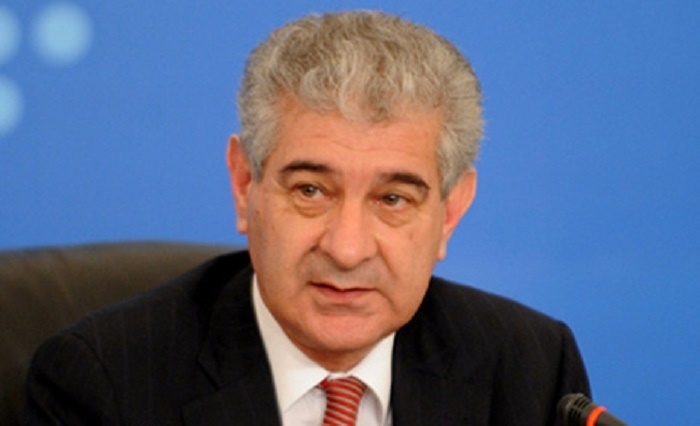
Armenia is trying to drag out the settlement of the Nagorno-Karabakh conflict and, therefore, avoids separate meetings, Azerbaijani Deputy Prime Minister Ali Ahmadov told reporters in Baku Dec. 10.


-1780923278.jpg&h=190&w=280&zc=1&q=100)