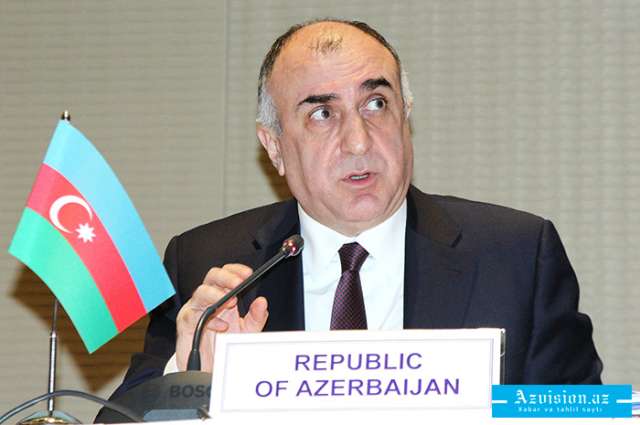
To prevent from achieving any progresses in the settlement of the Armenia-Azerbaijan Nagorno-Karabakh conflict, the Armenian side has always committed provocative-sabotage acts, noted the minister.
He said that maintaining the current status quo and the presence of the armed forces of Armenia in the occupied territories of Azerbaijan is the main cause of escalation in the conflict and remains the major impediment to the conflict’s political settlement.
“The co-chairs of the OSCE Minsk Group at the level of heads of state have repeatedly issued statements on the unacceptability and unsustainability of the current status quo. Azerbaijan is the most interested party in moving beyond the current status quo. In this context, we assess the high-level substantive discussions in Vienna and St. Petersburg as positive steps in the right direction,” he said. “We must sustain the momentum and transform the understandings reached in those meetings into concrete actions without further delay.”
The substantial concrete results on the political arena will fundamentally change the situation, according to him.
Mammadyarov said that a step-by-step elimination of the consequences of the conflict, starting with withdrawal of the Armenian armed forces from the occupied territories of Azerbaijan, restoration of regional transportation and communication links and safe and dignified return of displaced persons to their places of origin, while addressing security concerns appropriately, will transform the conflict dynamics and significantly improve the overall security environment in the whole region.
“The aggressive policy of Armenia can never succeed. The sooner Armenia understands this reality and withdraws its troops from the occupied Azerbaijani territories, the sooner the conflict will be settled, also Armenia and its population will be able to benefit from the perspectives of cooperation, as well as the economic development,” noted the minister.
Mammadyarov said also that the Azerbaijani side together with the OSCE Minsk Group co-chairs will continue its efforts on the conflict’s settlement through substantive negotiations.
Meanwhile, all available opportunities existing within the international platforms will be used for this purpose, he added.
The conflict between the two South Caucasus countries began in 1988 when Armenia made territorial claims against Azerbaijan. As a result of the ensuing war, in 1992 Armenian armed forces occupied 20 percent of Azerbaijan, including the Nagorno-Karabakh region and seven surrounding districts. The 1994 ceasefire agreement was followed by peace negotiations.
Armenia has not yet implemented four UN Security Council resolutions on withdrawal of its armed forces from the Nagorno-Karabakh and the surrounding districts.
More about:


-1780923278.jpg&h=190&w=280&zc=1&q=100)