On the first day of 2017 in Beijing, concentrations of tiny particles that penetrate deep into the lungs climbed as high as 24 times levels recommended by the World Health Organization. More than 100 flights were cancelled and all intercity buses were halted at the capital’s airport.
In the neighbouring port city of Tianjin, more than 300 flights were cancelled while the weather forecast warned thick smog will persist until 5 January. All of the city’s highways were also shut as low visibility made driving hazardous, effectively trapping residents.
Across northern China 24 cities issued red alerts on Friday and Saturday, while orange alerts persisted in 21 cities through the New Year holiday. A red alert is the highest level of a four-tier warning system introduced as part of China’s high-profile war on pollution.
Decades of economic development have made acrid air a common occurrence in nearly all major Chinese cities, with government-owned coal burning power stations and heating plants and steel manufacturing concentrated in northern provinces the main source of pollution.
Smog worsens in the winter as coal burning spikes to provide heat for millions of people. China declared a “war on pollution” in 2014, but has struggled to deliver the sweeping change many had hoped to see and government inspections routinely find pollutions flouting the law.
“Why didn’t those polluting industries take a rest for the holiday,” one commenter mused on the Twitter-like Sina Weibo.
“New Year’s morning in Beijing, I thought I was blind,” said another, attaching a photo of a window completely darkened with grey haze.
China’s middle class is increasingly less tolerant of the deadly air, and in December tens of thousands of “smog refugees” decamped to clearer skies. Top destinations included Australia, Indonesia, Japan and the Maldives.
That bout of smog saw 460 million people, a population greater than North America, breathing toxic air, according to Greenpeace.
As pollution covered swaths of the country on New Year’s Eve, China announced plans to increase coal output to 3.9 billion tonnes by 2020.
A study earlier this year found acrid air is linked to at least one million deaths a year, and contributed to a third of all fatalities in major cities, on par with smoking. Another research paper said the smog had shortened life expectancies by five and a half years in parts of China.
China smog: millions start new year shrouded by health alerts and travel chaos
02 January 2017
Read: 1413
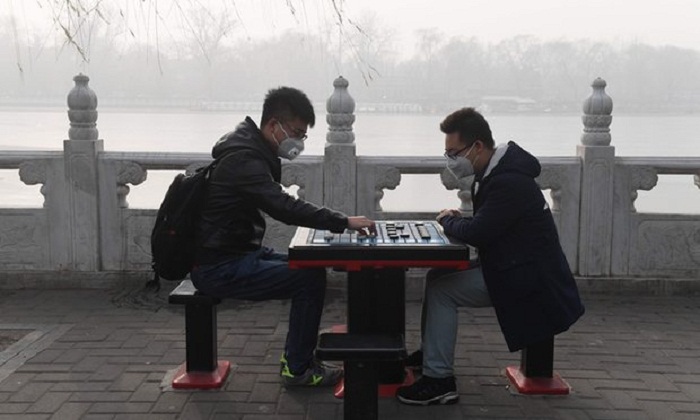
Millions in China rang in the New Year shrouded in a thick blanket of toxic smog, causing road closures and flight cancellations as 24 cities issued alerts that will last through much of the week.


-1780923278.jpg&h=190&w=280&zc=1&q=100)