It did not take long for him to get an answer, as social media erupted with suggestions and disgust.
Combat corruption and impunity. Eliminate gasoline vouchers for elected officials. Collect more taxes from multinational corporations. Cut the salaries and benefits of high-level government officials. Sell the presidential plane. Reduce the first lady’s wardrobe spending. Resign.
It was a tough week for the president, who seems to be trapped in a slow, downward spiral of unpopularity, with two more years left in his term and Mexico reeling from myriad problems including rampant corruption, resurgent homicide rates, a thriving drug trafficking industry, a sluggish economy and a plummeting peso.
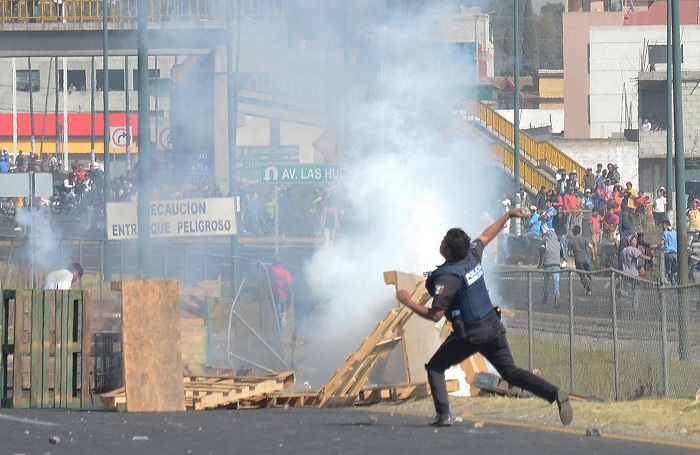
The few voices of support for Mr. Peña Nieto — in political circles and among news commentators — have been drowned out by his detractors, and no more so than in the past week, when discontent over the gas price increase boiled over into protests and looting, setting off clashes with security forces that left several dead around the country.
The unrest comes as Mexico braces for the administration of President-elect Donald J. Trump, who has threatened to introduce far more restrictive immigration and trade policies, including canceling the North American Free Trade Agreement, increasing deportations and building a wall on the southern border of the United States.
Concern in Mexico about Mr. Trump’s planned tack on trade has been so great that he has been able to move the markets on the basis of his Twitter posts.
The Mexican peso hit record lows last week after he criticized General Motors on Twitter for exporting cars made in Mexico and Ford Motors announced that it would cancel plans for a $1.6 billion plant in the country. Mexico’s Central Bank was forced to intervene to bolster the peso, but the currency took another hit after Mr. Trump threatened Toyota on Thursday with a “big border tax” if it went ahead with a new factory in Mexico.
Mexico’s Economy Ministry issued a brief statement in response saying the government “rejects any attempt to influence investment decisions by companies based on fear or threats.”
But in general the Peña Nieto administration seems to be struggling to figure out how to respond to Mr. Trump. Mexicans have been clamoring for a full-throated, chest-out defense of their country and sovereignty against Mr. Trump’s threats, but many say they have yet to hear it.
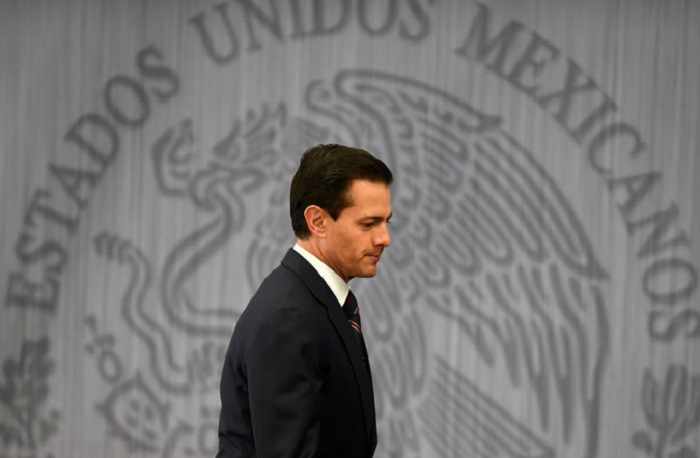
President Enrique Peña Nieto of Mexico in Mexico City last week. His approval ratings have sunk below 25 percent. Credit Alfredo Estrella/Agence France-Presse — Getty Images
Confidence in Mr. Peña Nieto is so low — approval ratings have sunk below 25 percent — that he appears to be struggling to sell anything to the public, most recently the gas price increase last week.
“Such a low level of popularity reduces his capacity to gather support or his margin for action to reactivate the economy,” said Ignacio Marván, a political analyst at CIDE, a Mexico City university.
Mr. Peña Nieto’s efforts have been handicapped, analysts say, by a seeming disconnect from the public mood.
The government looked unprepared for the violent responses to the price increases, which took effect on New Year’s Day, when most officials were on vacation. Mr. Peña Nieto himself was in the middle of a golfing trip. And as bloody unrest swept across the country, the president kept silent, finally making a public statement on the issue on Wednesday.
Even then, his comments were buried in a news conference focused on cabinet changes that included the return of Luis Videgaray, a close confidant who resigned under pressure as finance minister in September after championing an unpopular visit by Mr. Trump to Mexico.
The administration’s detached response to the upheaval contributed to the impression of a president out of touch with the population, analysts said, and gave a sense of a leadership that is adrift, blindsided by events.
The gas price increases of about 20 percent are part of a broad overhaul that ends the state’s monopoly over the energy industry. The government has long controlled and subsidized gasoline prices, but by the end of the year it will allow gas prices to fluctuate according to the market, a move intended to attract foreign investment to compete with the state oil company, Pemex.
The government has argued that ending fuel subsidies will help the country avoid spending cuts to social programs, and that the subsidies have disproportionately benefited wealthier Mexicans who own cars. But many fear that higher gasoline prices will increase costs for food and public transportation, hitting the pocketbooks of even the poorest Mexicans.
Though Mexico’s opposition parties are now condemning the price increase, most of them voted for it as part of the budget approved in October. But Mexico imports more than half of its gasoline from the United States, and Mr. Trump’s election sent the peso to a historic low, raising the price of imported gasoline in pesos greater than anybody expected.
Analysts said the government could have forestalled the fallout by designing measures that would have softened the blow for poorer Mexicans, or by creating subsidies for truck drivers or owners of older vehicles.
“They didn’t think about it,” said Vidal Romero, a political analyst at the Autonomous Technological Institute of Mexico. “There is no compensation for citizens.”
/The New York Times/


-1780923278.jpg&h=190&w=280&zc=1&q=100)