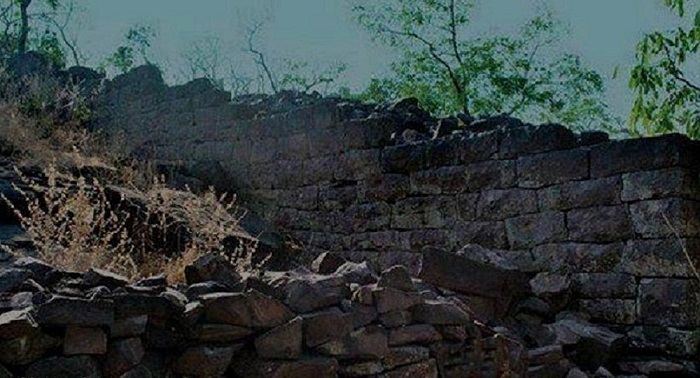
Globally, it would then be the second longest fortification after the Great Wall of China. However, many sections are buried deep inside rubble and need to be excavated. This may take a few more years, a state archeology official told Sputnik.
The wall is built of alternating sections of stone and earth and some are 20 feet high. One stretch from Choukigarh fort in Badi, about 100 kms from the lake city of Bhopal, extends into a neighboring district, adjacent to the national highway 12. Along its length, archaeologists have discovered several relics of temples and murals.
Many theories about the wall abound. Most researchers suggest it may have been built by the Kingdom of Parmars, the warrior class that ruled west-central India between the 9th and 13th centuries to mark their territory against the Kalachuris, a clan that had established a capital close to the present city of Jabalpur, 150 km away. With the largest section built inside the dense jungles of Vindhyachal mountain range, the wall has cracks in some places but is still quite strong with its width ranging from 10 to 15 feet.
The State government is spearheading a conservation effort and also exploring the tourism potential of the site, according to sources.
More about:


-1780923278.jpg&h=190&w=280&zc=1&q=100)