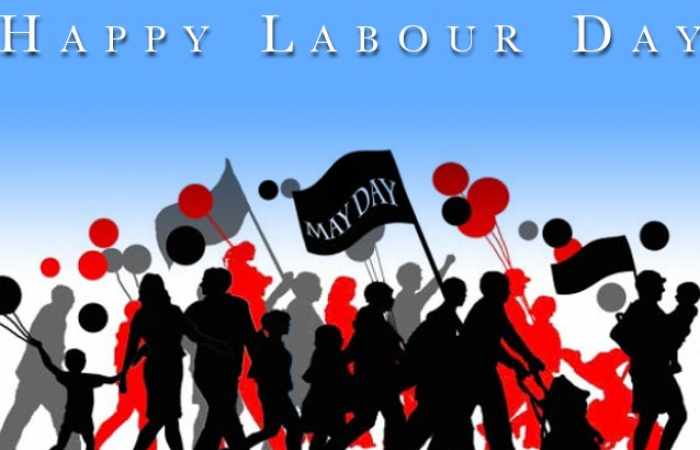
1 May is celebrated as May Day in most countries around the world. In the United Kingdom and Ireland the bank holiday isn't fixed on May 1st, but instead is observed on the first Monday of May.
In the 20th century, the holiday received the official endorsement of the Soviet Union, and it is also celebrated as the Day of the International Solidarity of Workers, especially in some Communist states. Celebrations in communist countries during the Cold War era often consisted of large military parades with the latest weaponry being exhibited as well as shows of common people in support of the government.
Curiously (given the origin of the 1 May date), the United States celebrates Labor Day on the first Monday of September (1 May is Loyalty Day, a legal but not widely recognized holiday in the United States). There is some suggestion that the reason for this was to avoid the commemoration of riots that had occurred in 1886. The adoption of May Day by communists and socialists as their primary holiday have been as a another reason as they further inceased official resistance to May Day labor celebrations in America.
Canada, Australia, New Zealand and the Netherlands also celebrate Labour Day on different dates; though that has to do with how the holiday originated in those countries.
May Day has long been a focal point for demonstrations by various communist, socialist, and anarchist groups.
The first day of May was also a pagan holiday in many parts of Europe, Its roots as a holiday stretch back to the Gaelic Beltane. It was considered the last day of winter when the beginning of summer was celebrated.
During Roman times, 1 May was seen as a key period to celebrate fertility and the arrival of spring. The Roman festival of Flora, the goddess of flowers and the season of spring, was held between 28 April and 3 May.
More about: #MayDay2017


-1780923278.jpg&h=190&w=280&zc=1&q=100)