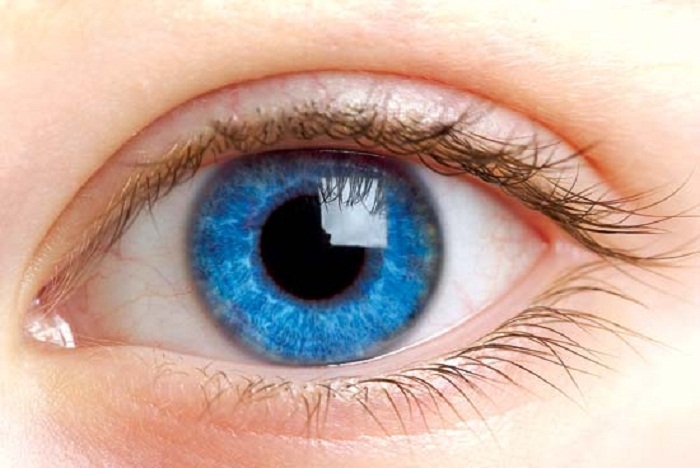
If all those pathways aren't destroyed, and information still flows "through secondary neural pathways that bypass" the primary visual cortex, blindsight can result. "For some unknown reason, these secondary routes are not sufficient to maintain the feeling of sight," she writes, and yet our ability to interact is preserved.
A doctor provides a real-world hypothetical in the Guardian: Someone with blindsight has a letter to mail; though he cannot see or describe the mail slot, he can slide the letter right in it.
The BBC zeros in on Milina Cunning, a Scottish woman who lost her sight in her 20s and whose blindsight has been "extensively" studied. Less hypothetically, Cunning describes a test she participated in, in which she was told to walk through a hallway full of chairs; she repeatedly collided with them.
She was then instructed to do it again at a faster-than-normal pace—and says she didn't hit one. She says the neurologist explained to her that by not thinking about it, her subconscious was able to take over.
/Fox News/
More about: #Vision


-1780923278.jpg&h=190&w=280&zc=1&q=100)