The resolution came several days after Germany declared itself the first Western government to suspend arms sales to Saudi Arabia, the world’s largest arms importer. On Sunday, Chancellor Angela Merkel told reporters that, in light of Khashoggi’s Oct. 2 killing in Saudi Arabia’s Istanbul consulate, “arms exports can’t take place in the current circumstances.”
But it remains unclear whether Thursday’s resolution will pressure the governments of individual E.U. member states to follow suit in giving up their own lucrative Saudi contracts.
After the United States, Britain and France are Saudi Arabia’s two largest sources of arms. So far, both have issued scathing condemnations of Khashoggi’s killing but have stopped short of heeding Merkel’s example.
According to Britain’s Department for International Trade, Britain exported arms and equipment worth at least $1.4 billion to Saudi Arabia last year, but the real figure is probably higher. In 2017, potential French sales of more than $14.7 billion were approved.
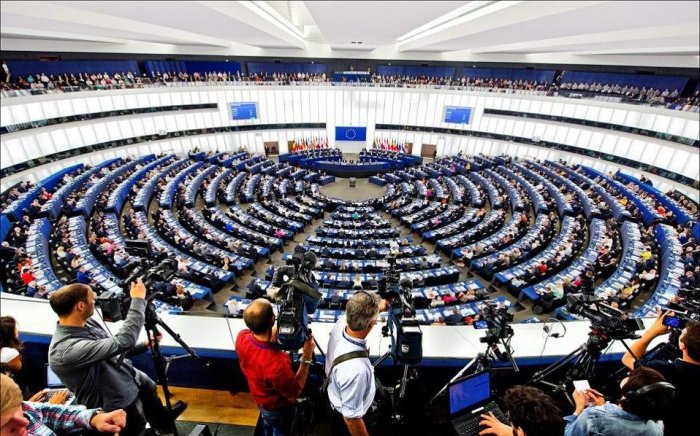
With lofty rhetoric, the European Parliament, an assembly of 751 elected officials from the 28 E.U. members states, rejected “the explanations provided so far by the Saudi authorities on the matter as lacking credibility.”
They also cast the torture and killing of Khashoggi, a Washington Post contributing columnist, as an affront to European ideals.
His killing, the resolution read, is “part of a pattern of a widespread crackdown against prominent human rights defenders, women activists, lawyers, journalists, writers and bloggers” in Saudi Arabia after Crown Prince Mohammed bin Salman began assuming control of the country’s security apparatus.
The statement also decried the fact that Saudi authorities “are seeking the death penalty for several of these activists” and lamented that “surveillance systems and other dual-use items have been used to track and trace the movements of human rights defenders.”
Aside from a potential arms embargo, the resolution sought to push individual European countries to impose sanctions on specific individuals suspected in the Khashoggi killing with “targeted measures” such as travel bans in Europe or the freezing of European assets.
For some lawmakers, targeting specific individuals could send a small but powerful message. Marietje Schaake, a Dutch liberal lawmaker, said in advance of the vote that measures such as visa restrictions and freezing Saudi assets could “make it harder to go shopping in Paris and send children to good universities in Europe.”
The vote came in the wake of an admission from the Saudi Foreign Ministry that Khashoggi’s killing was a premeditated act, a significant reversal from earlier statements saying that he had left the consulate and that he had died following a fistfight with security officials.
More about: Saudi-Arabia European-Parliament Khashoggi


-1780923278.jpg&h=190&w=280&zc=1&q=100)