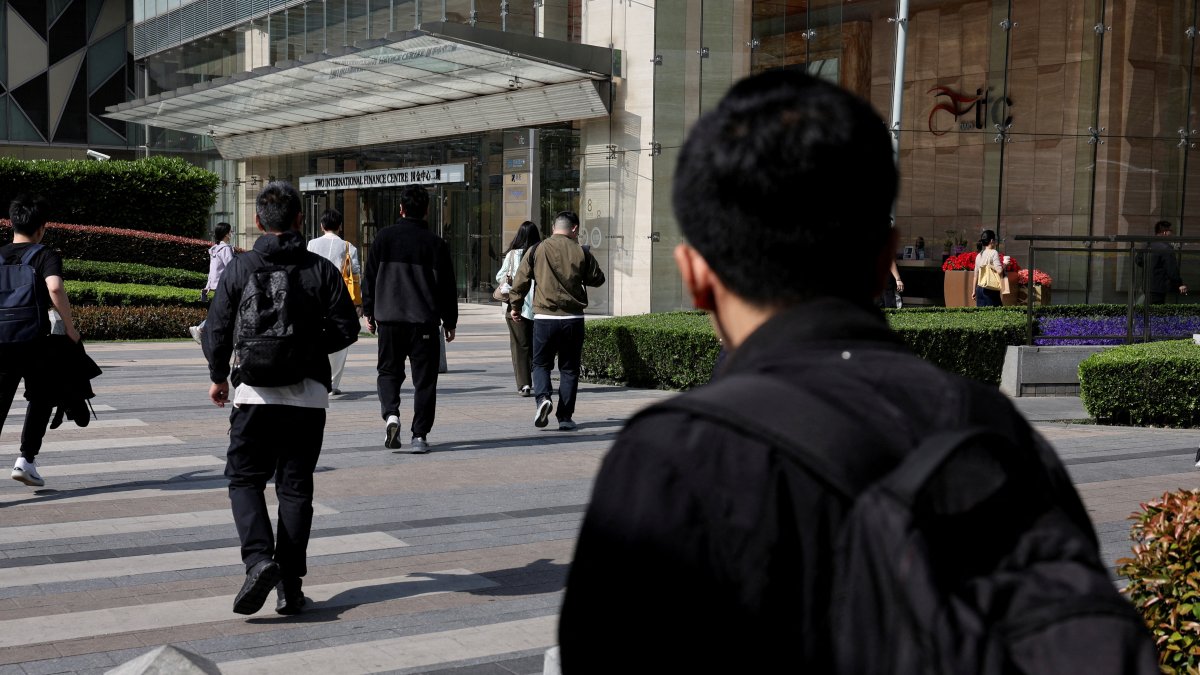
While China has no shortage of skilled local engineers, the program is part of an effort by Beijing to portray itself as a country welcoming foreign investment and talent, as rising trade tensions due to U.S. tariffs cloud the country's economic outlook.
China has taken a series of measures to boost foreign investment and tourism, opening more sectors to overseas investors and offering visa waivers to citizens from most European countries, Japan, and South Korea, among others.
"The symbolism is powerful: while the U.S. raises barriers, China is lowering them," said Iowa-based immigration attorney Matt Mauntel-Medici, referring to China's new visa category, called the K visa, which launches on Wednesday.
The K visa, announced in August, targets young foreign science, technology, engineering and mathematics (STEM) graduates and promises to allow entry, residence and employment without a job offer, which could appeal to foreign workers looking for alternatives to U.S. job opportunities.
Earlier this month, the Trump administration said it would ask companies to pay $100,000 per year for H-1B worker visas, widely used by tech companies to hire skilled foreign workers.
"The U.S. has definitely shot itself in the foot on H-1Bs, and the timing is exquisite for China's K visa,” said Michael Feller, chief strategist at Geopolitical Strategy.
Other countries, including South Korea, Germany and New Zealand, are also loosening visa rules to attract skilled migrants.
Immigration experts say the main attraction of the K visa is no requirement for a sponsoring employer, which has been regarded as one of the biggest hurdles for those seeking H-1B visas.
The H-1B visa requires employer sponsorship and is subject to a lottery system, with only 85,000 slots available annually. The new $100,000 fee could further deter first-time applicants.
"It's an appealing alternative for Indian STEM professionals seeking flexible, streamlined visa options," said Bikash Kali Das, an Indian student at Sichuan University.
India was by far the largest beneficiary of H-1B visas last year, accounting for 71% of approved beneficiaries.
AzVision.az
More about: UnitedStates China


-1780923278.jpg&h=190&w=280&zc=1&q=100)