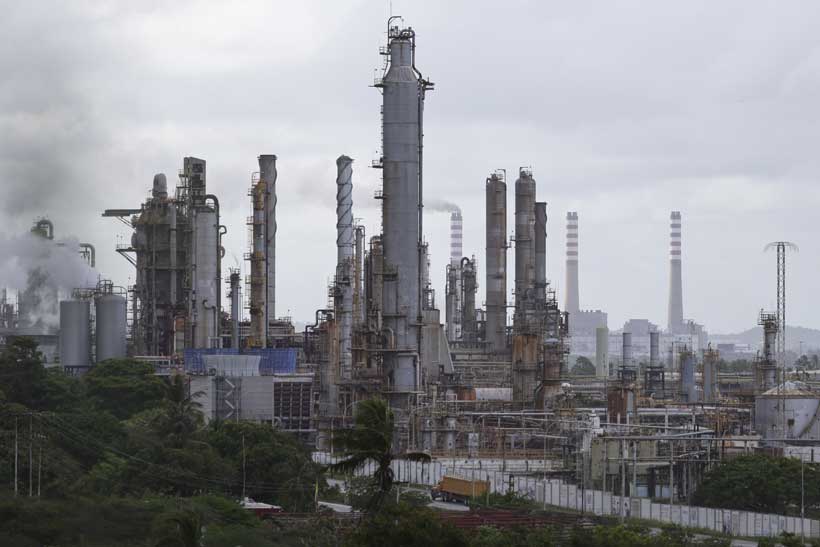
The OPEC member's oil exports fell close to zero in the weeks after the United States imposed a blockade on oil shipments in December, with only U.S. oil major Chevron exporting crude from its joint ventures with PDVSA under U.S. license.
The embargo left millions of barrels stuck in onshore tanks and vessels. As storage filled, PDVSA was forced to shut wells and order oil production cuts at joint ventures in the country.
The state company is now instructing the joint ventures to resume output from well clusters that were shut as a third oil tanker set sail from Venezuela's coast on Tuesday.
The mood at many of PDVSA's offices and operational sites has rapidly changed since the company said it was progressing in negotiations with the U.S. that are expected to bring much-needed investment into oilfields and facilities, the sources said.
Some company executives are rushing to arrange meetings with foreign oil executives about production, exports, power supply and business opportunities, while others are engaged in an internal audit ordered by the company's board following a cyberattack last month that knocked down PDVSA's central system.
Venezuela's overall crude output fell to some 880,000 barrels per day (bpd) last week, from 1.16 million bpd in late November, according to production figures from consultancies that independently track Venezuelan oil output.
The country's main oil region, the Orinoco Belt, saw a reduction to some 410,000 bpd compared with 675,000 bpd in late November, according to the figures.
Two supertankers had departed Venezuelan waters late on Monday carrying about 1.8 million barrels each of crude in what may be the first shipments of a 50-million-barrel supply deal between Caracas and Washington to get exports moving again in the wake of the U.S. capture of Venezuelan President Nicolas Maduro.
PDVSA has yet to confirm that the supply deal for the 50 million barrels has been finalized. The state company had worked to prevent deeper output reductions that might be difficult to reverse, given that production facilities at some oilfields are dilapidated due to lack of maintenance.
PDVSA and the White House did not immediately reply to requests for comment.
LSEG ship-tracking data showed that the vessels on Tuesday were heading north from Venezuela's coast to the Caribbean, where many oil companies including traders, producers and refiners lease storage tanks. One of the ships was signaling the South Riding Point terminal in the Bahamas as its destination.
AzVision.az
More about: Venezuela


-1780923278.jpg&h=190&w=280&zc=1&q=100)